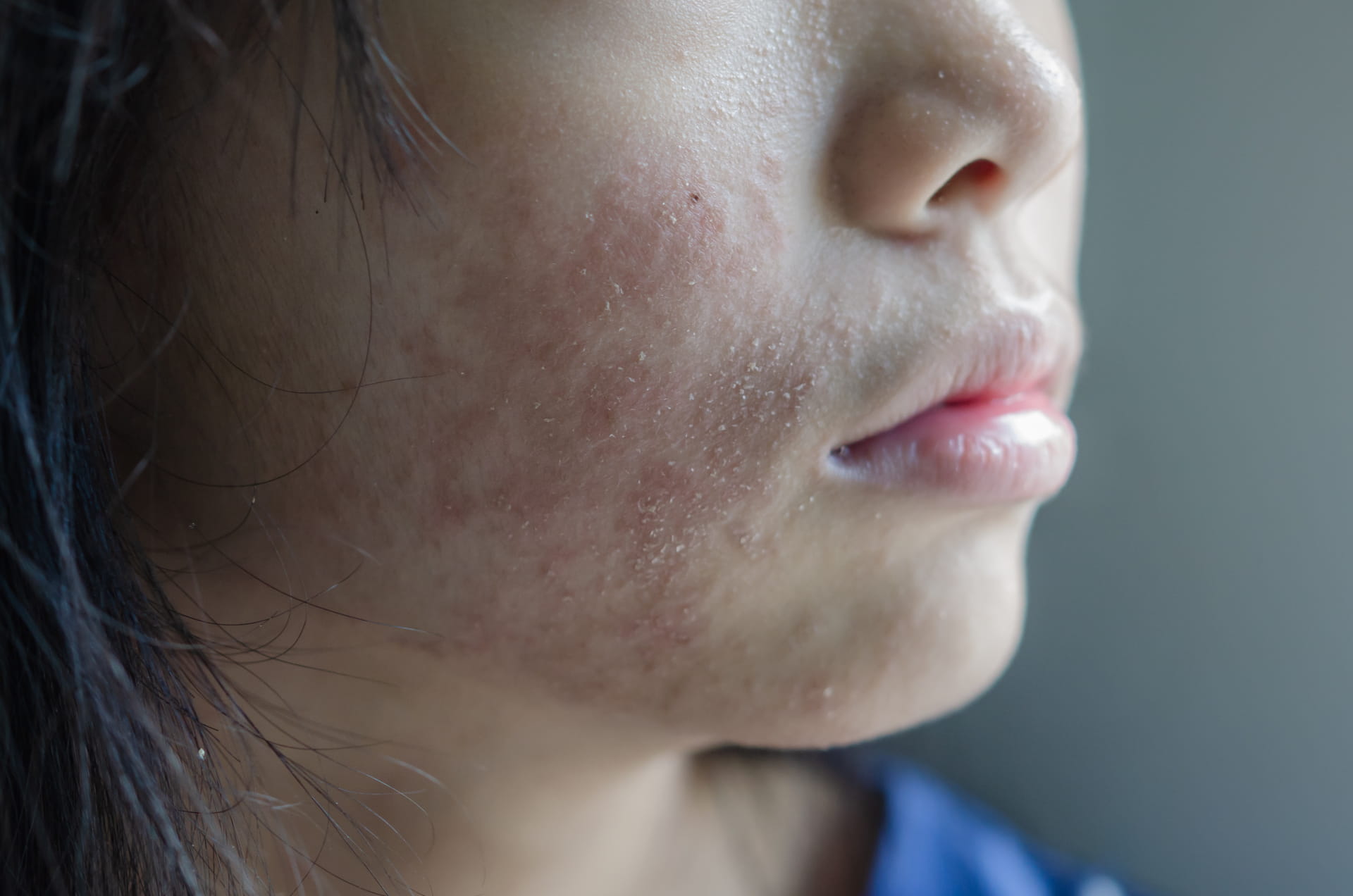


Exfoliation

In adults, the normal turnover rate of skin is about 28 days. That means within 28 days our previous skin sheds off and new skin replaces it. If this cycle repeats more frequently it will make aging faster, on the other hand if it delays to shed off, layers of dead skin start to pile up.
These dead skin layers can be removed by exfoliation, which may be:
- Physical exfoliation
- Chemical exfoliation
In physical exfoliation scrubbing is done with the help of different scrubbing agents like oatmeal or scrubbing machine.
While in chemical scrubbing certain peeling agents like glycolic acid, salicylic acid is used.
Intensive exfoliation causes thinning of skin, that makes the skin more permeable for germs and chemicals, which can cause damaged skin, promoted aging and enhanced infections. The logic behind this is, when we exfoliate frequently, we peel off skin layers but new layers come at their normal pace. Moreover, outer skin layers provide a barrier against water loss, when this layer is peeled off, water loss from lower skin layers is increased, hence the skin is dehydrated and damaged.
Important precautions while exfoliation include:
- Avoiding unnecessary exfoliation
- Avoiding harsh chemicals
- Using moisturizers
- Maintaining good hydration levels
- Patch test before using newer exfoliating agents